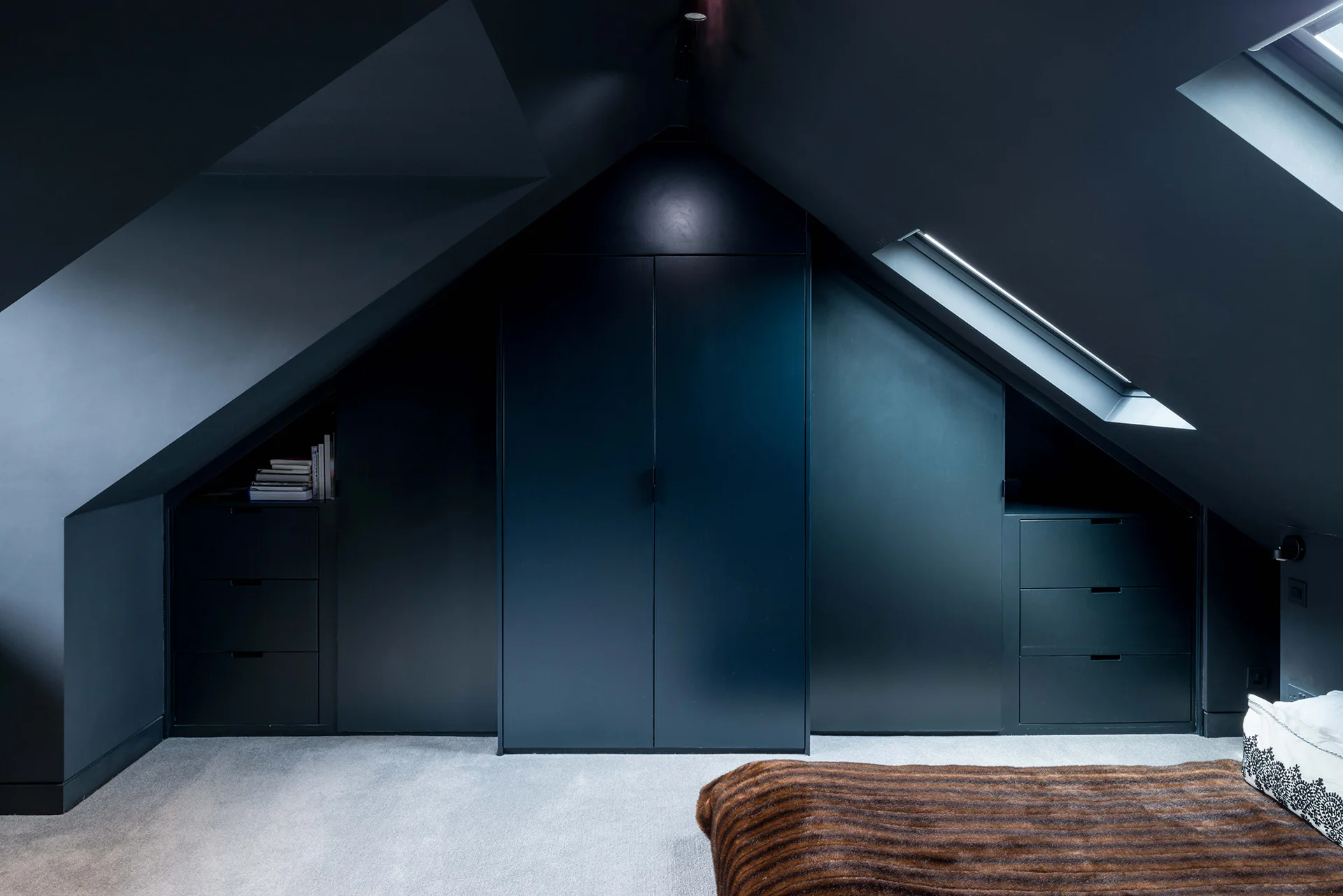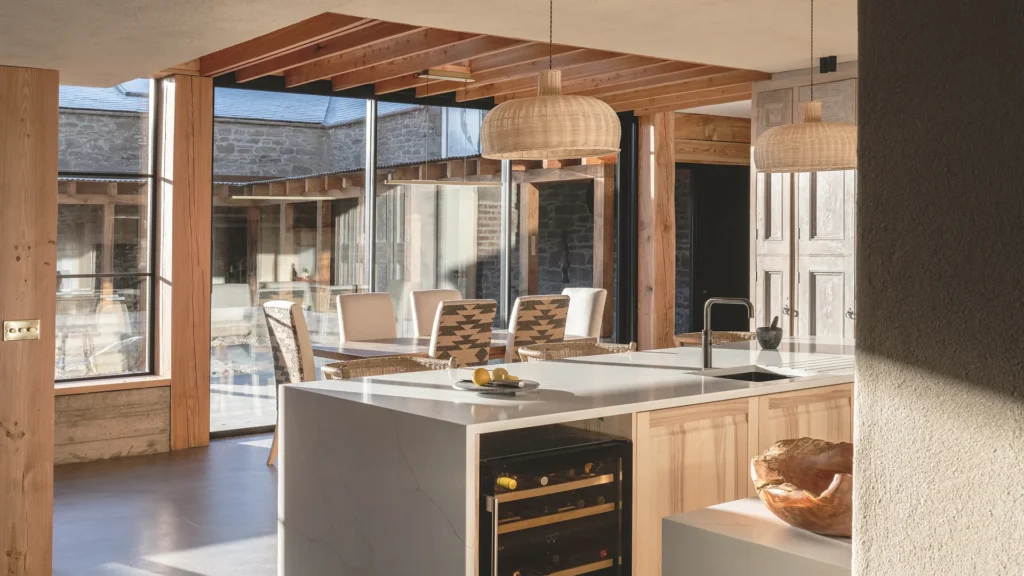
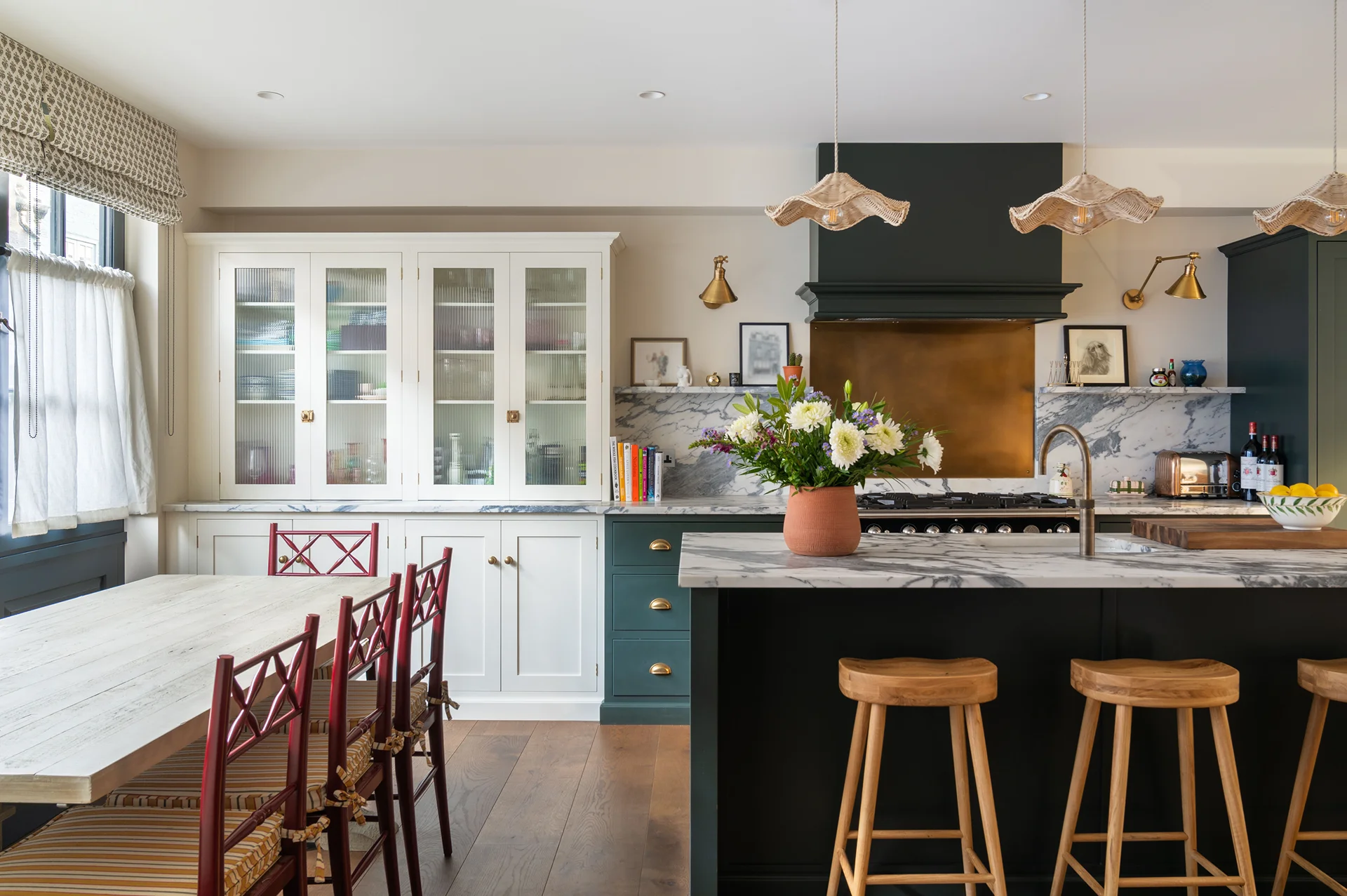
There’s a particular quality to London’s mews streets that I find fascinating—a kind of restraint and history written into every brick façade and cobblestone. Modest carriage doors converted to garages, narrow lanes tucked behind the grand terraces of Knightsbridge, Kensington, and Belgravia. These streets preserve an architectural language that must remain intact. Planning authorities guard them carefully, and rightly so. The streetscape is part of London’s heritage, a testament to a time when these buildings housed horses and carriages rather than families.
But step through one of those unassuming doors, and the story changes entirely.
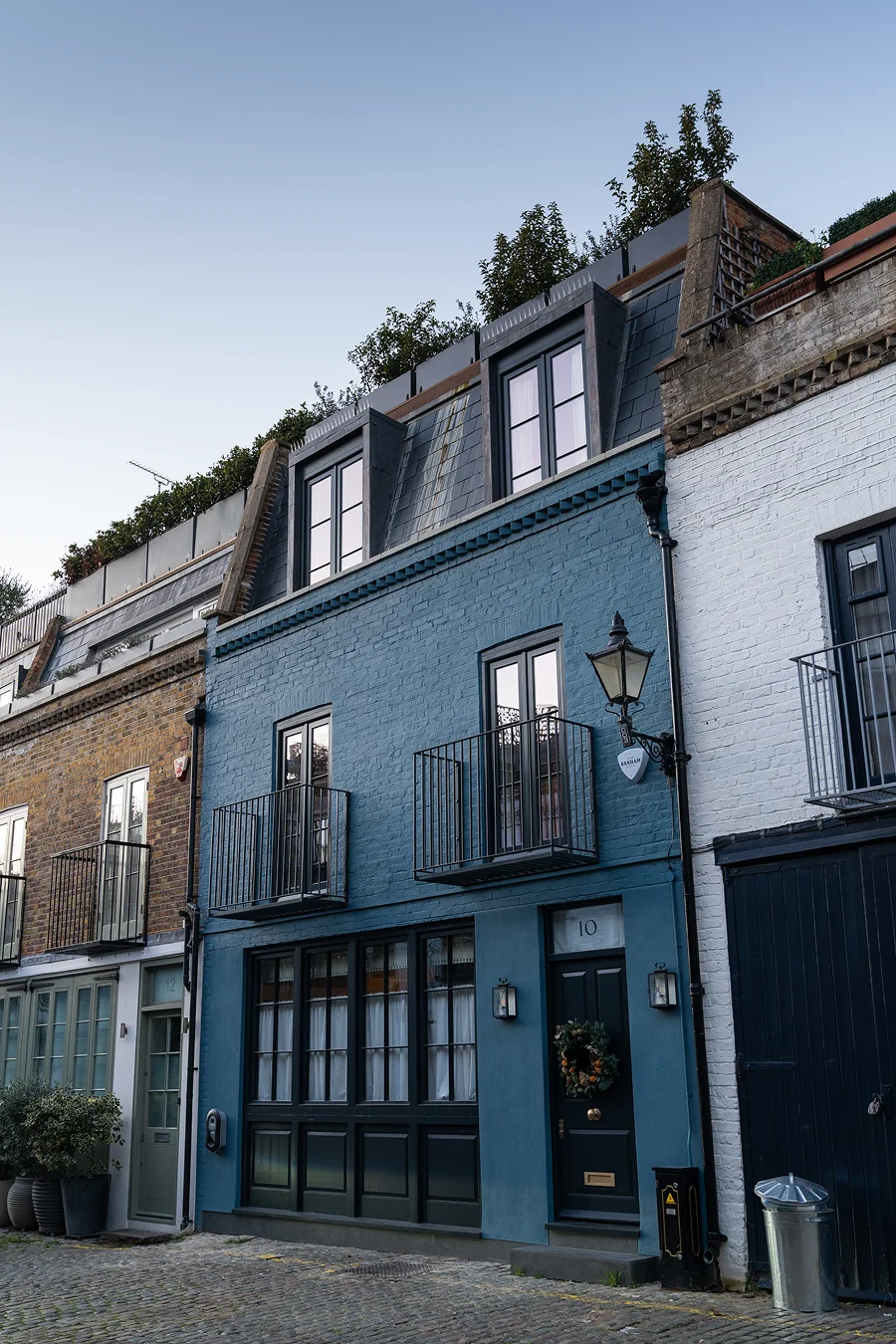
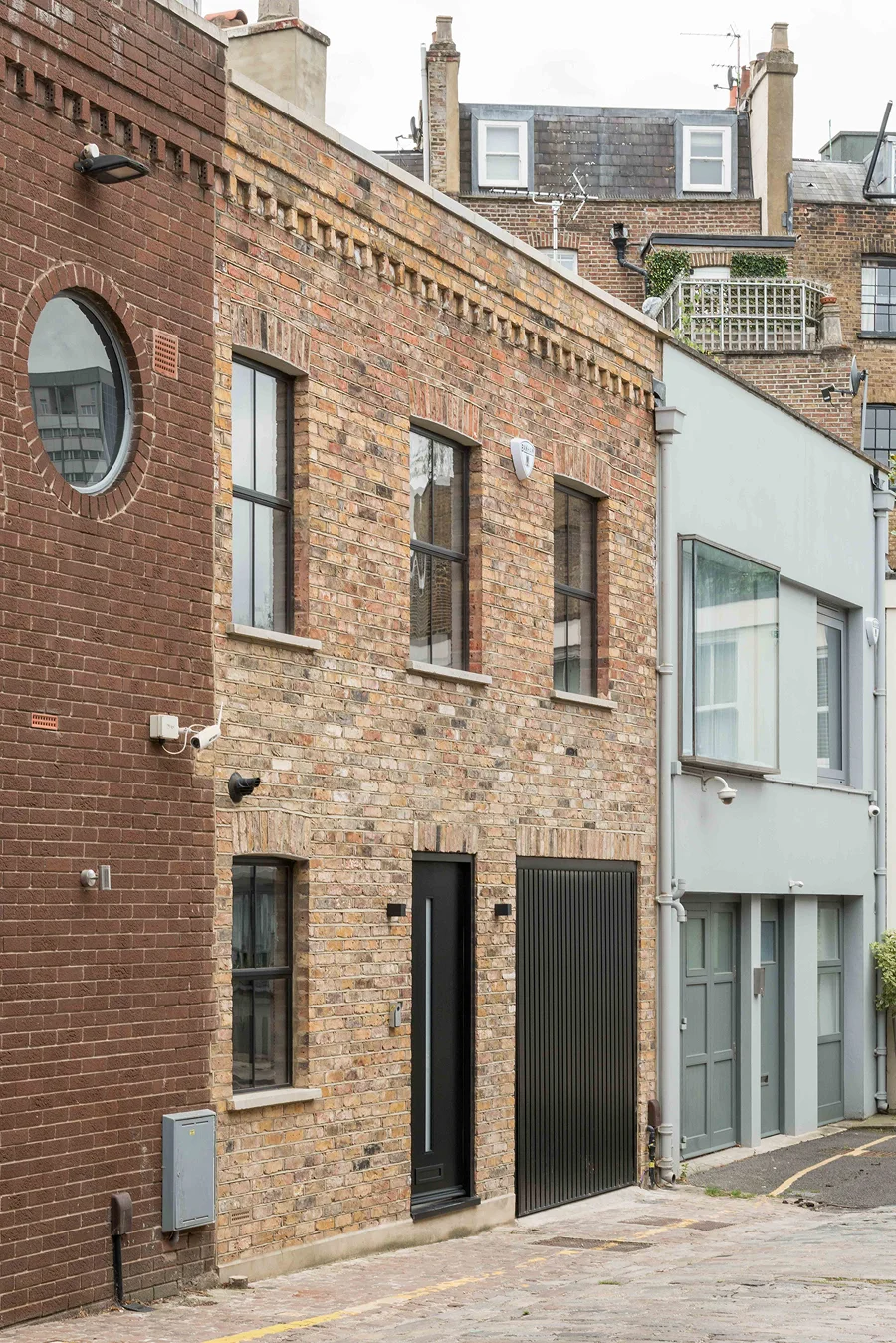
We’ve worked on mews houses across London for many years now, from the traditional Holland Park lanes to the historic Grosvenor Estate, from South Kensington to Islington. Each project begins with the same fundamental constraint: the exterior must remain largely untouched. No dramatic cantilevers, no bold contemporary additions visible from the street. The mews must continue to read as a mews. Yet within this apparent limitation lies an unexpected freedom. When you cannot expand outward, you’re forced to look inward, upward, downward. I think this is where the work becomes most interesting—you begin to discover volume that was always there but invisible, trapped in compartmentalised layouts designed for a different century and a different purpose.
There’s something of the Moroccan dar to these buildings, I’ve always felt. The dar, with its plain street-facing walls and concealed interior courtyard, presents modesty to the world whilst creating sanctuary within. Mews houses operate on a similar principle, though not by original design. The preservation requirements create this condition accidentally, but the effect is the same: crossing the threshold becomes a revelation. The understated exterior gives way to light-filled volumes, contemporary materials, spaces that feel generous despite the constrained footprint.
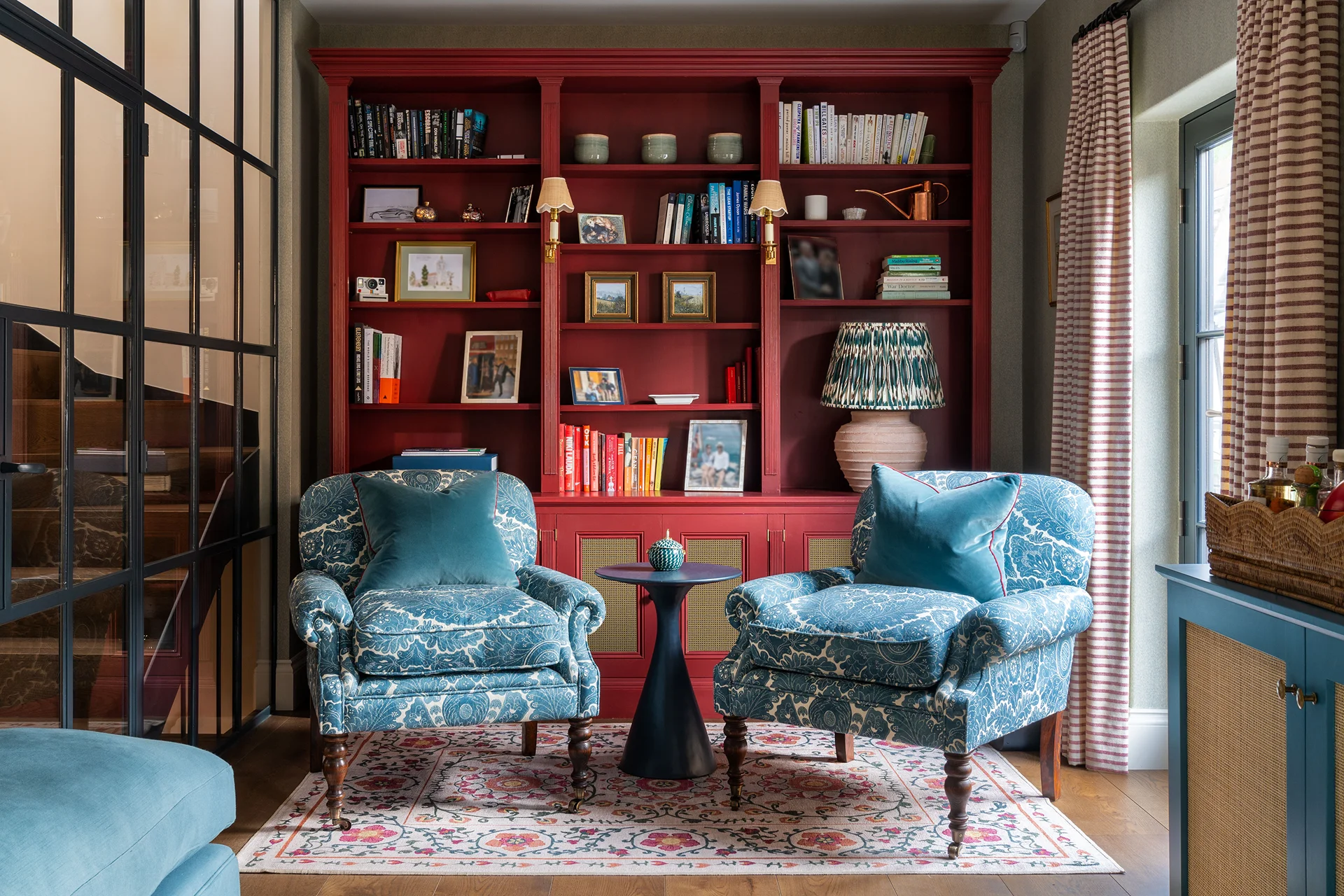
The process of unlocking this hidden architecture is rarely straightforward. Mews houses present a dense tangle of constraints that would discourage less determined clients and designers. The buildings are small, typically squeezed into footprints that were never intended for modern family living. Party walls limit horizontal expansion. Conservation area restrictions govern almost every external change. Listed building consent, where applicable, adds further layers of complexity. Then there are the practical realities: drainage systems that predate modern standards, structural walls that bear loads in unexpected ways, roof pitches that seem designed to waste space, mechanical and electrical services that must somehow thread through impossibly tight cavities.
At William Mews in Knightsbridge, we encountered many of these challenges simultaneously. The house was particularly modest, just two storeys in a demanding conservation area. Yet through careful negotiation with planning authorities, we achieved something remarkable. Not only did we extend downward, creating a basement level with outside space, but we raised the ridge, permitting an additional storey. The scale of works then justified drilling boreholes for a ground source heat pump and installing a private water supply. What began as a constrained two-bedroom mews ultimately became a four-bedroom family home, fully modernised with outside spaces and entertaining areas, whilst retaining a private garage. The street reads exactly as it did before. The transformation is entirely interior.
Light becomes the central design challenge in almost every mews project, I think. These buildings were never conceived for habitation in the modern sense. Original windows are small, often positioned to serve utilitarian functions rather than to illuminate living spaces. The narrow footprints mean limited opportunities for glazing on side walls. Conservation restrictions typically prevent wholesale changes to street-facing elevations. We’re left with the roof plane as our primary opportunity, and we’ve learned to choreograph light with obsessive care.
At Cornwall Gardens Walk in South Kensington, the loft conversion and internal redesign focused almost entirely on capturing and distributing natural light. We repositioned the staircase to become a vertical light well, installed new roof lights, and reconfigured the first floor to create proper living space. The most satisfying moment came late in the construction programme. For months, the new roof light had been protected by scaffold sheeting, the space below working under artificial illumination. When the protection finally came down, light flooded through the opening, cascading down the staircase to the ground floor. The bedrooms on the top floor, which had felt dim and cellular, suddenly came alive. The space transformed in an instant, and you could finally see what the design had been reaching toward all along. I think that’s when a project truly clicks—when theory becomes tangible and the space does exactly what you’d hoped it would.
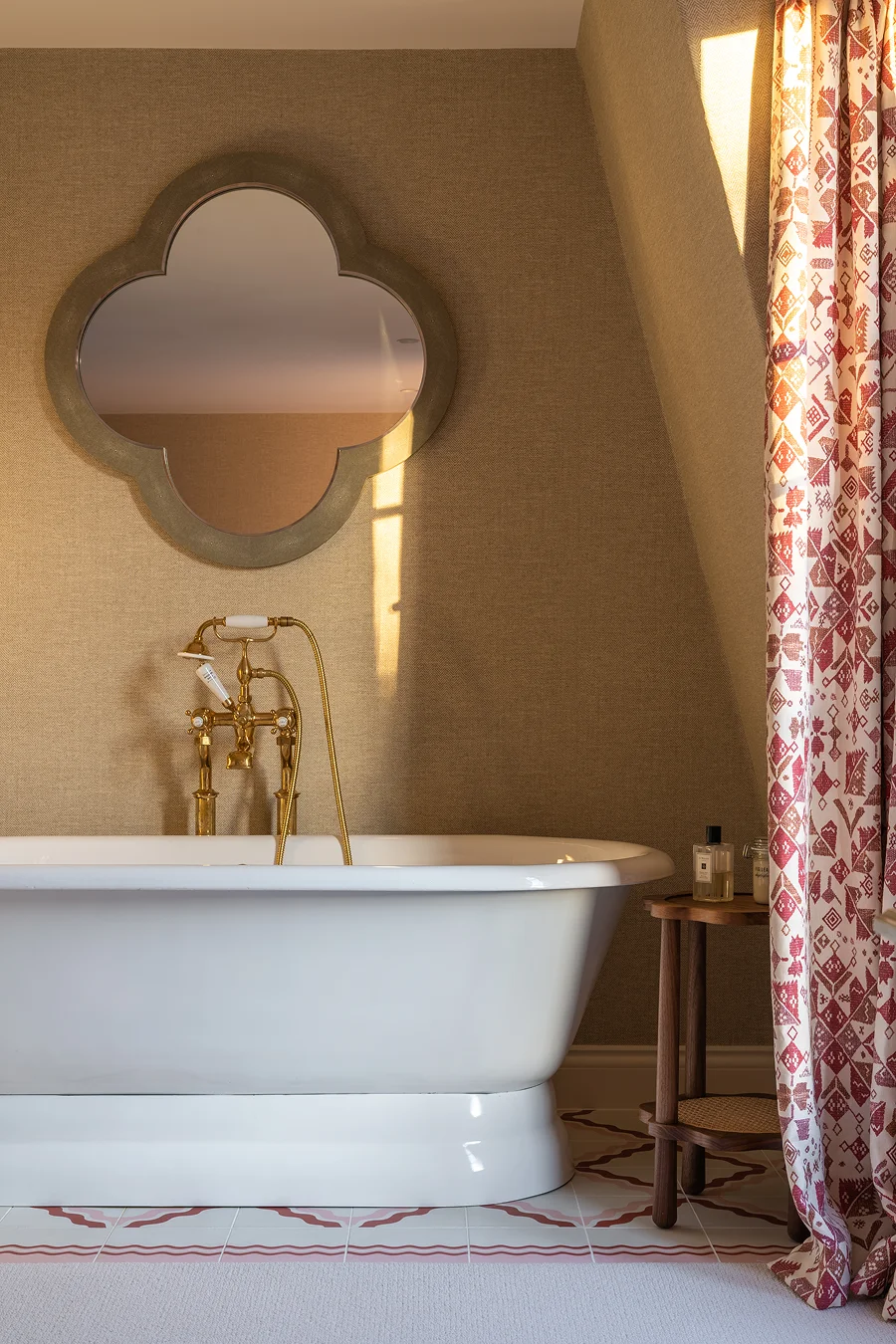
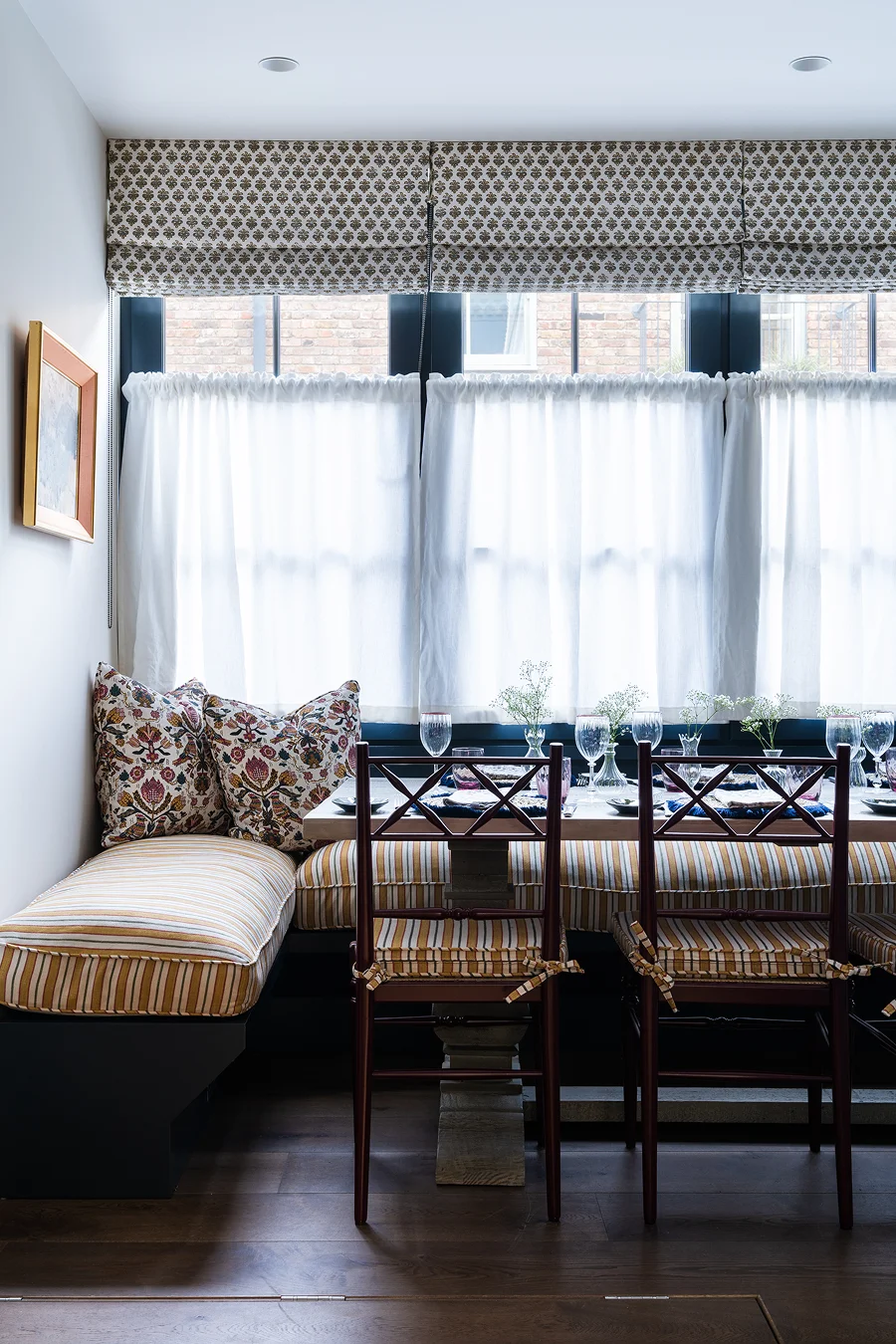
This pursuit of light requires more than simply cutting holes in roofs, I’ve learned. It demands an understanding of how light moves through a building at different times of day, how it reflects off surfaces, how it can be borrowed between spaces. Roof lights must be positioned not just where they’re structurally feasible but where they’ll have the greatest impact. Internal layouts must be reconsidered to allow light to penetrate deep into the plan. Staircases, often treated as mere circulation, become light shafts. Glazed internal screens, carefully detailed steel-framed partitions, material choices that reflect rather than absorb: these become essential tools.
The vertical dimension offers other opportunities beyond light. Loft conversions allow us to capture roof space that serves no purpose in the original layout. At St Luke’s Mews, working with the talented interior designers Rosanna Bossom, we extended onto the roof and created a roof terrace, adding both internal volume and precious external space. Basements, though expensive and technically complex, can transform a mews house entirely. At Addison Place, the basement extension and covered garage fundamentally changed how the building functions, allowing us to open up the ground floor layout and maximise the garden space.
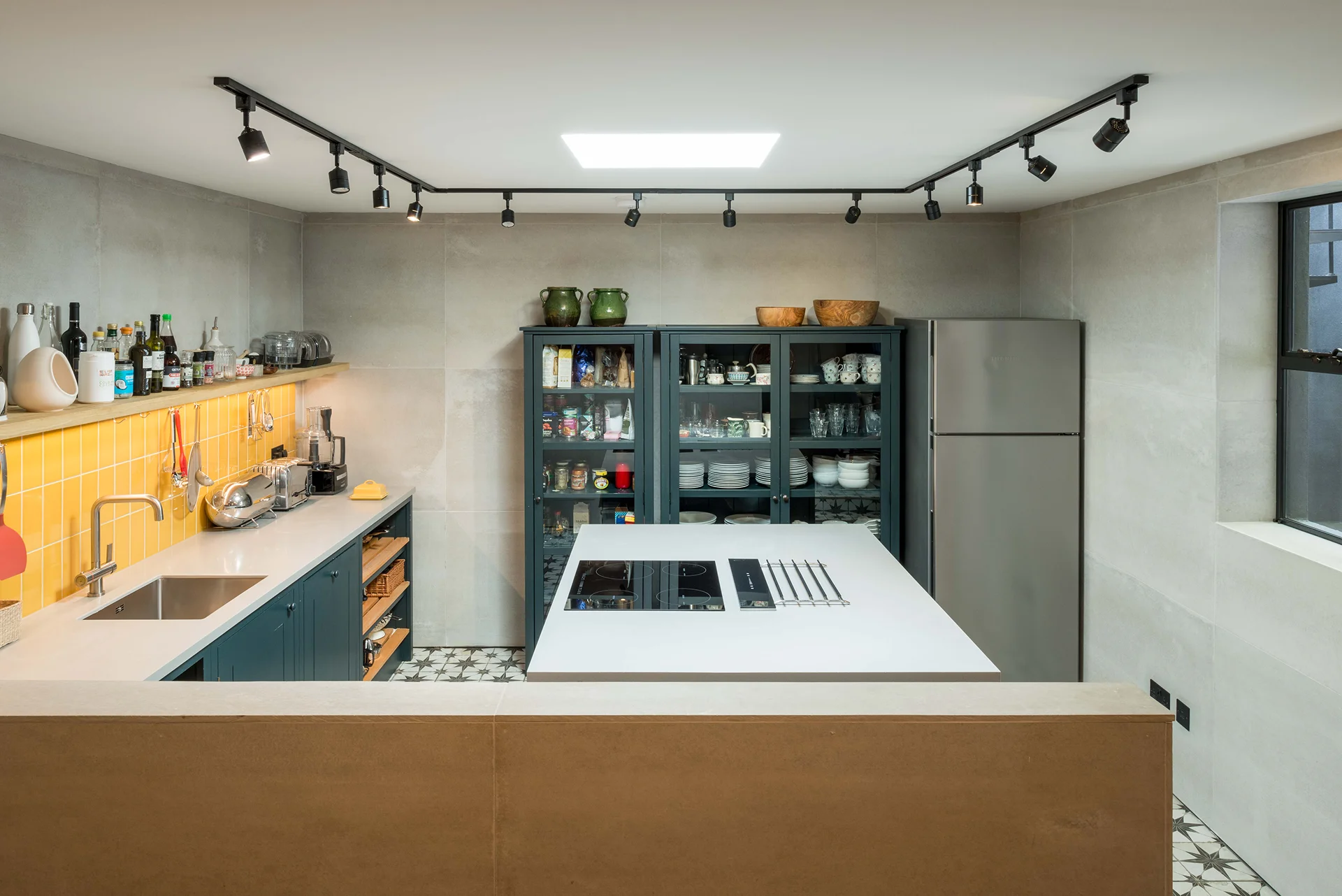
Garages present their own particular puzzle. Many mews houses still contain the original carriage door opening, now used for car storage. For some clients, retaining a garage in central London is non-negotiable. For others, the space represents an opportunity too valuable to waste. At West Eaton Place Mews on the Grosvenor Estate, we converted the garage into a spacious kitchen, a transformation that required sensitive handling given the traditional character of the estate. The result feels both contemporary and respectful, I think—a careful balance between present needs and historical context.
The technical challenges of mews work cannot be overstated. Almost every project involves substantial upgrades to services: heat pumps replacing inadequate heating systems, solar panels where roof orientation permits, mechanical ventilation to meet modern building standards, new drainage runs to accommodate reconfigured layouts, electrical installations that support contemporary life. These systems must integrate invisibly within constrained spaces, threaded through structures never designed to accommodate them. The work is forensic, demanding, occasionally maddening. But it’s also where craft and technology meet necessity, where problem-solving becomes design.
What strikes me most, after years of mews projects, is how these constraints ultimately sharpen rather than diminish the architecture. When you cannot rely on grand gestures or expansive floor plates, every decision must work harder. A repositioned staircase isn’t just about circulation; it’s about light, flow, spatial connection. A new roof light isn’t merely a window; it’s the difference between a habitable room and a dark cupboard. Material choices, joinery details, the thickness of a partition: all of these carry more weight when volume is precious.
There’s satisfaction in this kind of work that differs from designing on greenfield sites or working with generous urban plots. The mews house demands ingenuity. It forces you to see possibilities where others see only restrictions. It requires patience with planning processes, technical creativity with services and structure, and a kind of three-dimensional thinking that treats volume as something to be discovered rather than simply enclosed.
The streets remain unchanged. The heritage is preserved. But behind those modest doors, families are living in homes that would astonish the original builders. Light pours through spaces that were once dark. Volumes expand where none seemed possible. The transformation is complete yet invisible from the cobblestones outside. That tension—between preservation and innovation, between what must stay the same and what can be reimagined—is where I think the work lives. It’s where constraint becomes opportunity, and hidden architecture reveals itself.